


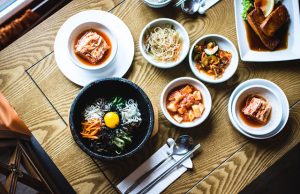

A Japanese restaurant is looking beyond its usual operations to find ways to support communities, with its general manager saying businesses can begin by using the skills and resources they already have.
Kouji Shiba, general manager of Magure Japanese Izakaya, shared the perspective after the restaurant participated in the launch of “Unfiltered,” an advocacy initiative that uses an original Filipino musical film to promote awareness of youth mental health.
The initiative, launched on Friday, September 25, also introduced the First 100 National High Schools for the Mental Health Initiative, bringing together advocates, educators, partners and members of the media.
Magure serves Japanese comfort food classics and specialties, including ramen, sushi, donburi and tempura.
For Shiba, mental and emotional struggles, like physical hardships caused by unexpected events, can affect anyone.
“Mental and emotional struggles, just like physical hardships caused by unexpected events such as natural disasters, can happen to anyone,” he told Interaksyon in an online interview.
His comments also came months after the restaurant conducted a food outreach for families affected by the June 8 earthquake in General Santos City.
READ: Rescuers race to reach trapped after powerful quake in Mindanao
On June 30, Shiba and head chef Atsushi Nohara personally prepared and cooked meals at the Holy Cross Spiritual Center before distributing them to beneficiaries at Holy Cross Parish in Barangay Calumpang.
Shiba said the restaurant decided to help after learning about the situation.
“When we learned about the situation after the earthquake, our first thought was simply, ‘What can we do?’” he said.
“We are a restaurant, so the most natural thing we could do was prepare food. Our team decided to cook the meals ourselves and personally bring them to the affected community,” he added.
The experience showed the team how a restaurant’s existing resources can be used for community efforts.
“This experience showed us that restaurants already have many of the things needed to help: a kitchen, ingredients, people who know how to prepare meals, and a team that is used to serving others,” Shiba said.
He said having the staff prepare and serve the meals themselves was also important because it showed them how their everyday work could have a different value outside the restaurant.
“That was one of the biggest lessons for us. Sometimes helping does not require doing something completely new. We can start with what we already know how to do,” he said.
Shiba also recalled the response from the families who received the meals.
“What stayed with us most was the gratitude of the families we met. Even while facing such a difficult situation, they welcomed us with smiles and thanked our team,” he said.
“We went there hoping to give something to them, but I think we also received something important from the experience.”
Beyond disaster relief, Shiba said restaurants can also provide spaces where people can relax and connect with others.
“As someone who operates a restaurant, I believe that food has the power to help people relax and feel a little better, even if only for a moment,” he said.
“A good meal, a comfortable place, and time spent around a table with family or friends can sometimes bring comfort when someone is going through a difficult time.”
Shiba acknowledged that restaurants cannot address every problem but said they can still contribute in their own way.
“Of course, a restaurant cannot solve every problem. But we can create a place where people can enjoy a meal, connect with others, and hopefully leave feeling a little happier than when they arrived,” he said.
For other food businesses interested in community initiatives, Shiba said efforts do not have to begin with large projects.
“I would say that it does not have to start with something big,” he said.
“Start with what you already have and what you already know how to do,” the exec said.
“One small action may not change everything, but it can still mean something to someone. And if more people and businesses each do what they can, those small actions can become something much bigger,” he added.
Shiba said Magure is still learning and growing, but hopes to continue finding opportunities to contribute to the community.
“We simply want to continue doing what we can whenever we have the opportunity,” he concluded.
—Rosette Adel