

CAIRO — Christian-Muslim peace requires more than goodwill and calls for deeper understanding of Islam and Muslim communities, the head of the Philippine bishops’ conference said Monday.
Archbishop Gilbert Garcera said religious leaders must listen and learn from one another, particularly when Christians and Muslims live side by side.
“Effective pastoral ministry among communities where Christians and Muslims live side by side requires more than goodwill. It requires knowledge and understanding,” Garcera said at Masjid Misr, Egypt’s largest mosque and the world’s third largest.
Learning through encounter
A delegation of five bishops and five priests working with the Catholic Bishops’ Conference of the Philippines traveled to Cairo for a seminar on Islam, including Shariah and religious and cultural sensitivities important to Muslims.
The Aug. 29 to Sept. 6 seminar is facilitated by Egyptian Minister of Endowments Osama Al-Azhari as part of efforts to strengthen cooperation between the Egyptian state and the Philippines.
The delegation began its program with a visit to the House of St. Stefanos in Maadi, where they met Egyptian Catholic Church leaders and officials from the Ministry of Endowments.
The delegation was welcomed by Patriarch Ibrahim Isaac Sedrak, president of the Council of Catholic Patriarchs and Bishops of Egypt, along with Bishop Thomas Adly, bishop of Giza, Fayoum and Beni Suef, and Archbishop Markos William of the Coptic Catholic Diocese of Qoussiya.
Sheikh Mohammed Magdi Awad, director general of training at the Ministry of Endowments, also attended the meeting with the Filipino delegation.
Sedrak welcomed the visitors and discussed the importance of religious training, sharing experiences and strengthening the role of religious leaders in promoting dialogue, coexistence and peace.
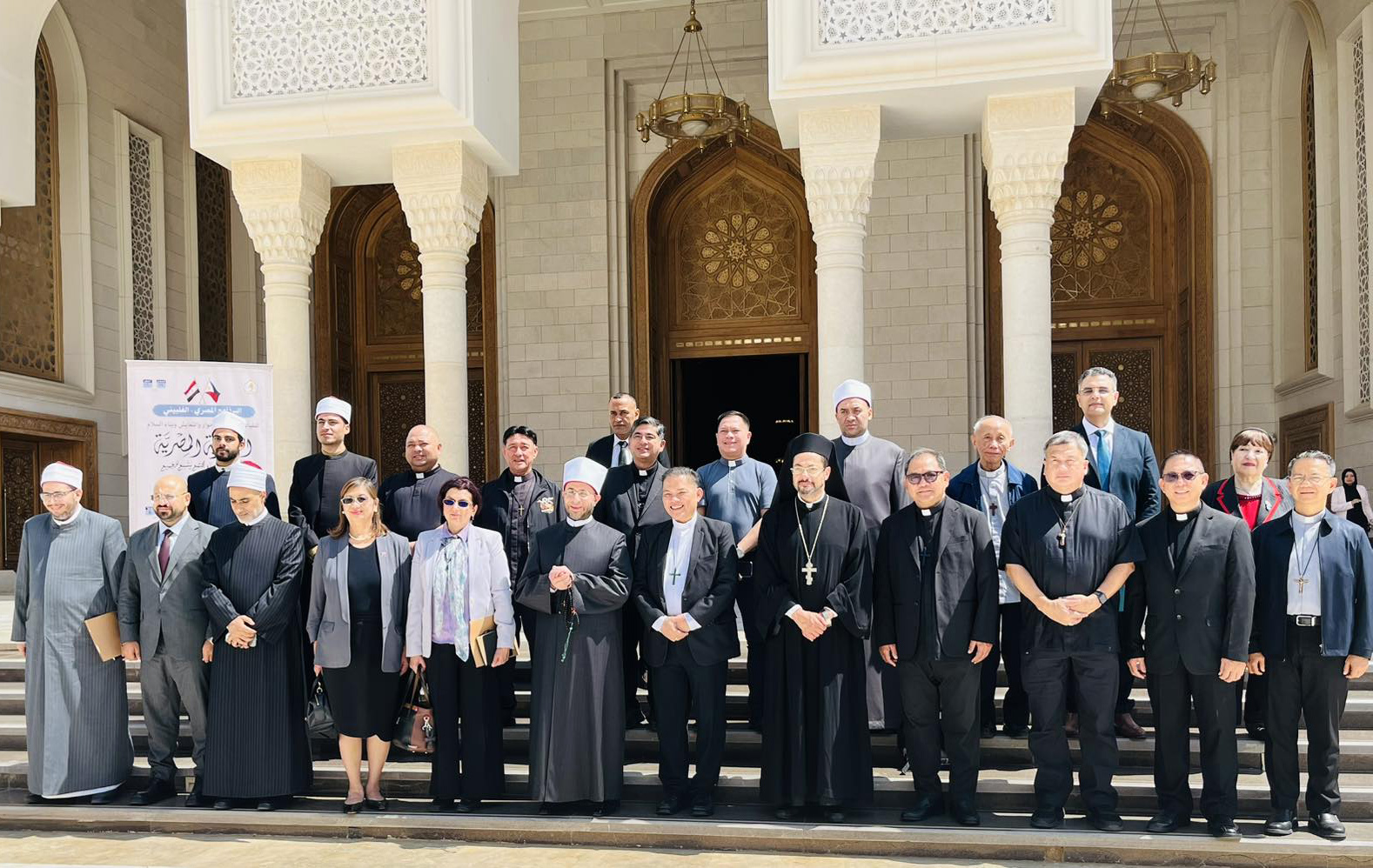
The meeting also highlighted Egypt’s experience in fostering communication and understanding among citizens of different religious communities as a model for religious coexistence.
Garcera said the delegation came “primarily as students,” prepared to listen, learn and understand Islam from the perspective of Muslims themselves.
“We need to understand how our Muslim brothers and sisters see their faith, their law, their family and community life,” he said.
From dialogue to peace
Such understanding is essential for Catholic leaders serving communities where Christians and Muslims interact daily, particularly in Mindanao, he said.
The Philippines is predominantly Christian but has a significant Muslim population, especially in Mindanao, where Christian-Muslim relations have included both conflict and cooperation.
Garcera said history should encourage religious leaders to build on examples of friendship and coexistence rather than remain trapped by past misunderstandings.
The initiative followed an April meeting between Cardinal Jose Advincula of Manila and Al-Azhari, which developed into a broader exchange between Filipino and Egyptian religious communities.
The delegation’s program includes visits to mosques, churches and sites associated with the Holy Family, offering a broader view of Egypt’s Christian and Muslim heritage.
Garcera said the experience could help bishops and priests become better pastors, dialogue partners and builders of peace when they return to the Philippines.
He said dialogue should move beyond formal discussions toward relationships built through listening, learning and genuine friendship.
“May greater knowledge lead to greater respect, greater friendship, and ultimately to that peaceful coexistence which both our faith traditions call us to promote,” Garcera said.