

An information technology educator developed a website that helps Filipinos determine whether a text message, chat, email, or link sent to them is a scam.
Reports said that John Clement Escobañez, a professor at National University-Manila, developed “Scam Ba To,” a website that assesses whether messages are legitimate or potentially fraudulent.
Users only need to copy and paste the suspicious message into the website’s text box and then click the “Suriin ang message” option.
The website then provides information indicating whether the message could be a scam.
“May text, chat, email, o link na parang may mali? I-paste mo. Sasabihin namin kung ano ang dapat mong bantayan bago ka gumawa ng kahit ano,” the website reads.
Escobañez said that if the result is green, the system considers the message safe.
However, if the result is red, it advises users to avoid engaging with the message and provides legitimate links they can visit.
Escobañez said he developed the platform partly because his family would often approach him whenever they received suspicious messages.
“Marami kasing mga kamag-anak, kasi ako ‘yung IT sa pamilya namin, na sine-sendan nila ako ng mga screenshot or mga message na nare-receive nila,” he told ABS-CBN News.
“Worried sila kung ano ‘yung magiging effect noon kapag nag-engage sila sa mga messages na ‘yun,” Escobañez added.
He also said that reports of Filipinos falling victim to scams prompted him to develop the platform.
“The inspiration behind ‘Scam Ba ‘To?’ is to educate Filipinos… kung paano sila makakapag-engage sa mga ganitong klaseng message, [sa] mga scam messages na nare-receive nila,” Escobañez shared.
The IT educator said that the system had been run around 40,000 times to improve its ability to detect scam messages.
He also added that the platform does not store the messages submitted by users.
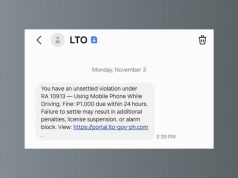
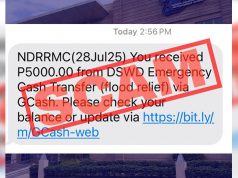
Scam messages remain prevalent in the country, often using spoofing or text hijacking to send fake warnings, notices, or offers through legitimate bank and company numbers.
Text hijacking is a tactic scammers use to make messages appear to come from official numbers, even when they contain red flags such as poor grammar or overly casual language.