

Nuclear power won’t solve the Philippines’ electricity crisis, the Catholic Church’s social justice arm said, pushing back against President Ferdinand Marcos Jr. ‘s renewed embrace of the technology.
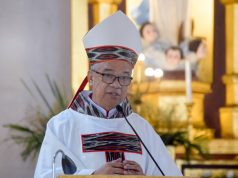
“Nuclear power is not a practical answer to today’s electricity crisis,” said Bishop Gerardo Alminaza, president of Caritas Philippines. “It is costly and raises serious questions about safety, radioactive waste, public debt, and accountability.”
Alminaza said Marcos used his fifth State of the Nation Address this week to promote nuclear energy, hydrogen projects and petroleum contracts, while omitting the climate crisis, destructive mining and communities threatened by fossil fuel expansion.
READ: FULL TEXT: Marcos’ 2026 State of the Nation Address
The government should not dismiss public skepticism about nuclear power as confusion or a lack of information, he said, since the risks will outlast any single administration.
“Public concerns should not be dismissed as mere misunderstanding,” Alminaza said. “They require transparent, independent and participatory scrutiny because the risks, costs and long-term consequences will affect generations to come.”
Caritas Philippines is the social action arm of the Catholic Bishops’ Conference of the Philippines, working on poverty, disaster response and environmental advocacy across the country’s dioceses.
Alminaza also criticized Marcos for backing expanded fossil gas infrastructure, which he said is often mislabeled as clean energy despite deepening the country’s reliance on imported fuel and exposure to volatile global prices.
“Fossil gas is not clean energy,” he said. “More gas terminals and power plants will deepen dependence on imported fuel, expose consumers to unstable prices, and lock the country into decades of continued fossil fuel use.”
He welcomed Marcos’ proposal to remove so-called systems loss charges from electricity bills, along with support for rooftop solar and battery storage through the proposed Sariling Kuryente Act, calling both steps in the right direction.
But he said those measures cannot substitute for a full overhaul of the 25-year-old Electric Power Industry Reform Act, which he argues shields power companies from fuel price shocks while passing high generation costs on to consumers.
The country’s energy debate, Alminaza said, cannot be separated from the wider environmental and economic pressures facing poor and rural communities, including Indigenous groups affected by mining and energy projects.
“For Caritas, care for creation is never separate from care for the poor. The ecological crisis and the crisis of poverty are one human crisis that demands an integral response,” he said.