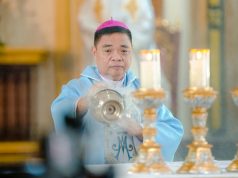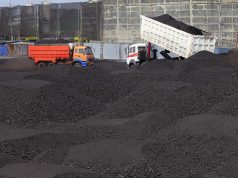


A Catholic bishop in Antique province has called for a government-backed transition away from coal on Semirara Island as its mining contract nears expiration in 2027.
Bishop Marvyn Maceda of San Jose de Antique said the transition should protect workers, diversify livelihoods and rehabilitate communities that depend heavily on coal mining.
“The time to begin a just transition for Semirara is now,” Maceda said in a statement issued Oct. 4, the feast of St. Francis of Assisi, the patron saint of ecology.
“We ask that the transition begin now, while there is still time and while resources are still available to prepare for it responsibly,” he said.
His appeal came as the Department of Energy (DOE) reassesses its recent coal bidding process and the existing operating contract approaches expiration.
Maceda urged the government to establish a clear, time-bound and adequately funded transition plan while coal operations continue during an appropriate transition period.
The plan should include renewable energy development, worker retraining, economic diversification, social protection and the progressive rehabilitation of land and waters affected by mining, he said.
Workers facing job losses should receive just compensation from the industry, along with adequate social protection and assistance from the government, Maceda said.
“The Church does not ask you to sacrifice your family’s daily bread in order to protect the environment,” he said. “We ask the government and industry to help ensure that you can continue earning that bread through work that is safe, dignified, and increasingly sustainable.”
He called on the DOE to incorporate the transition plan into the Philippine Energy Plan and future terms governing any coal operating contract for Semirara.
Maceda acknowledged Semirara Mining and Power Corp.’s programs for worker welfare, environmental rehabilitation, livelihoods and economic diversification but said they should form part of a broader plan to reduce the island’s dependence on coal.
He said the DOE’s reassessment of the coal bidding process provides an opportunity to address Semirara’s long-term future.
The bishop also cited the agency’s acknowledgment of ongoing water seepage that could affect extractable coal reserves and legal uncertainties involving the current operator.
“We must also have the courage to ask: How much more can this island responsibly bear?” Maceda said.
He called for workers, families, affected communities, local governments and civil society groups to have a meaningful role in shaping Semirara’s future.
“The social consequences we have feared are already being felt by families and communities,” Maceda said. “The future of Semirara concerns all of Antique.”