

A Catholic cardinal is pressing the Philippine government for transparency in a major U.S.-led technology initiative, saying openness should be a condition for any foreign partner’s participation.
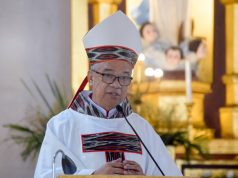
Cardinal Pablo Virgilio David said that without safeguards, the country’s role in the proposed Pax Silica initiative risks becoming one-sided rather than a genuine partnership.
READ: Catholic educators say Pax Silica project must earn public trust | Church’s social action arm raises concerns over Pax Silica hub
“Prudence therefore requires transparency, technology transfer, meaningful participation of Filipino scientists and industries, responsible stewardship of the environment,” David said.
He also called for a “clear commitment to moving our country up the value chain rather than remaining merely a source of raw materials and cheap labor.”
David, who leads the Diocese of Kalookan, said the debate should not focus on whether member nations are pursuing their own interests — that much, he said, is expected.
The real question, he said, is whether the initiative will build Filipino scientific capability, technological innovation and industrial resilience — or whether it will chiefly serve other countries while the Philippines supplies land, natural resources, water, energy, tax incentives and labor.
“These are legitimate questions — not because we oppose foreign investment, but because genuine partnership should strengthen the nation that hosts it,” he said.
Pax Silica is a coalition of about two dozen countries, including the United States, Japan, Australia and the United Kingdom, formed in December 2025 to secure supply chains for semiconductors, critical minerals and artificial intelligence.
The Philippines joined the coalition in April 2026. Its flagship domestic project is a proposed 4,000-acre “Economic Security Zone” in New Clark City, Tarlac province, which officials have billed as the initiative’s first AI-native industrial hub.
Beyond the economic stakes, David said the Church must raise a deeper moral concern about the growing reach of artificial intelligence.
Quoting Pope Leo XIV’s first encyclical, “Magnifica Humanitas,” David said the more urgent question is not what AI can accomplish, but what kind of people humanity is becoming.
“Technology must remain the servant of humanity, never its master,” David said.
He also cited Pope Francis’ encyclical “Fratelli Tutti,” warning against building the future solely on competing national interests and geopolitical rivalry.
History has repeatedly shown, David said, that a “might makes right” mindset leads to conflict, division and war among nations. The digital revolution, he added, must not become another arena where technological superiority is used for domination instead of cooperation.
“The real question,” David said, “is whether it will help build what Pope Leo calls a civilization of love rather than a culture of power.”